Mobile weighbridge Adelaide
Mobile weighing to keep your tow vehicle and caravan safe
Our mobile weighbridge services help you check your weight where it matters, when the caravan is packed and you are ready to start your travel from Adelaide.
Mobile weighbridge Adelaide
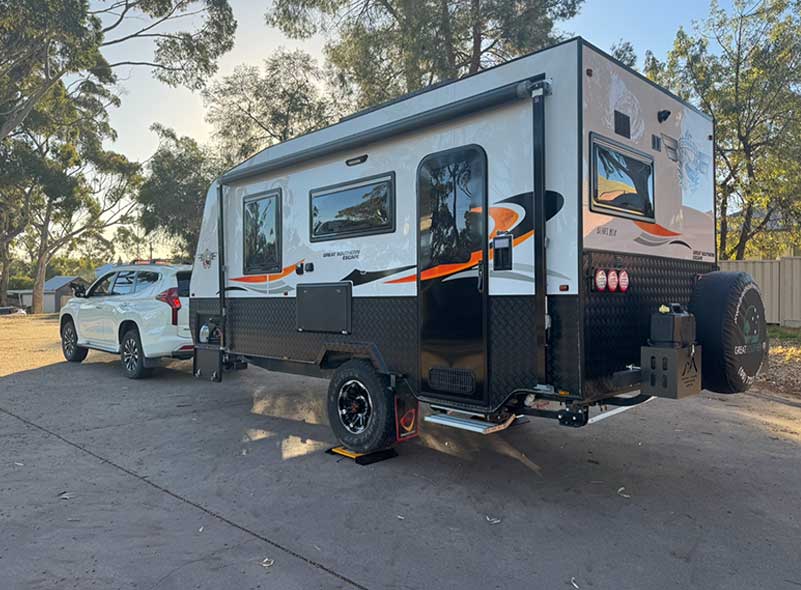
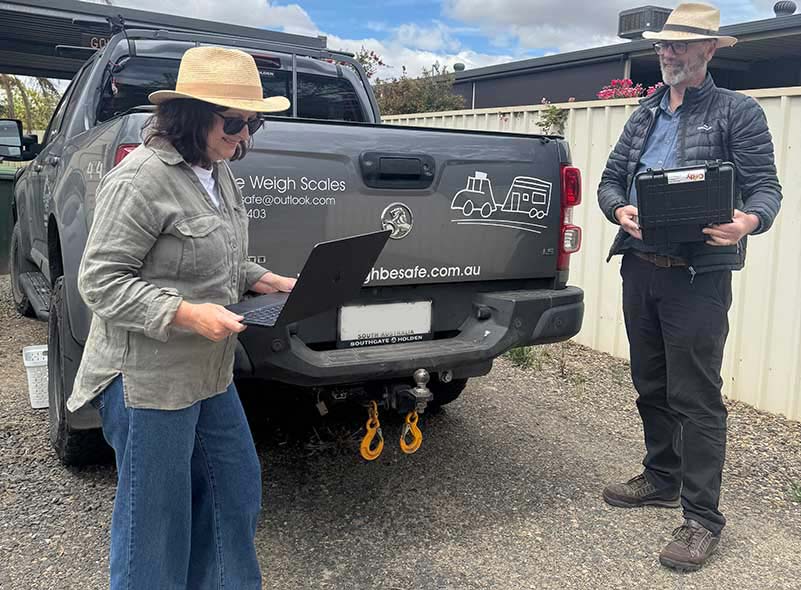
A safe and enjoyable caravan trip starts with knowing your weights. Mobile weighbridge services help you check the tow vehicle and caravan together, the way you travel when you are packed for a holiday. Weigh Be Safe’s mobile caravan weighing service comes to your home in the Adelaide metropolitan area and gives you a clear picture of your current setup, helping you avoid overloading and handling issues on the road. You receive guidance on what needs to change, and you know that you are meeting legal and manufacturer limits before the journey begins.
Safely loading and towing a caravan is not guesswork. A slight change in what you pack or where you place things can significantly affect steering, braking, and stability. A mobile weighbridge takes the stress away and gives you confidence that your caravan and vehicle are loaded safely.
Book your mobile weighbridge service and stay in control of your next trip.
Why use a mobile weighbridge
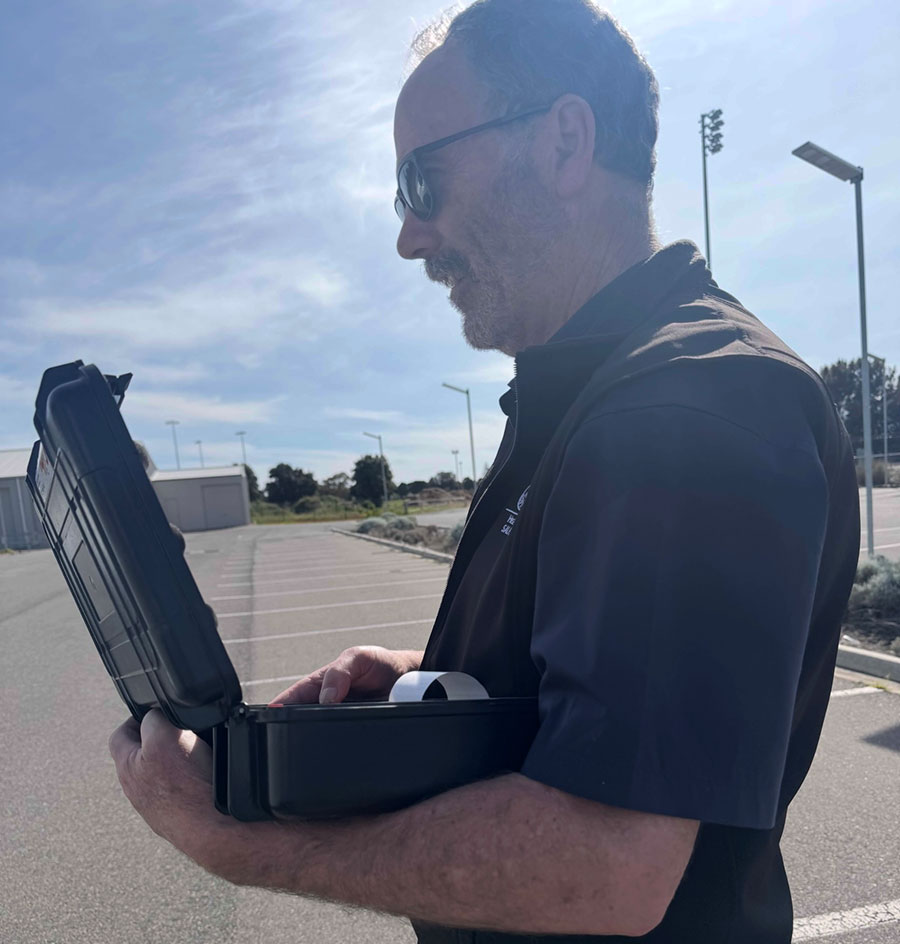
Mobile caravan weighing is one of the best ways to measure and understand the actual loads in a caravan and tow vehicle. With Weigh Be Safe, you’ll get a full breakdown of how your setup sits against weight limits. You can address problems before they result in sway, poor towing performance or insurance issues.
Here are some significant benefits of using a mobile weighbridge
- The service comes to your home, so you weigh the caravan exactly as it is packed
- You do not need to drive to a weighbridge before knowing if something is wrong
- You get information on all weight factors that matter to safety and compliance
- You can make adjustments and recheck on the day
- It helps avoid fines for overweight vehicles on South Australian roads
- You feel better prepared for long-distance travel
What is the difference between a mobile weighbridge and a public weighbridge?

Public weighbridge
You have two options when checking the weight of your caravan and tow vehicle. You can visit a public weighbridge, or you can book a mobile weighbridge visit. A public weighbridge gives only one number, the total weight, and that works well if you already understand your setup and only want a basic reading. It does not show how the weight is distributed across each axle or how much force the caravan exerts on the tow ball. These areas are essential for safe towing.
Mobile weighbridge
A mobile weighbridge checks far more than a single total. Everything is measured based on how you plan to travel. You see the tow vehicle’s weight alone. You know the caravan’s weight alone. You see the combined weight. Axle loads are checked. Tow ball force is measured. The load balance inside the caravan is reviewed. You also receive practical guidance on how small adjustments improve handling and keep everything within limits.
The goal is not just to weigh the caravan. The goal is to understand how your entire setup behaves on the road. You finish the visit with numbers that make sense and advice that helps every trip feel safe and steady. Safe towing feels better when you know everything is working together the right way.
How we ensure correct and accurate weighing
Our weighing sequence follows a clear process, so every number reflects the true travel condition of your setup.
- The tow vehicle is weighed first with all passengers included
- The caravan remains hitched at this stage
- The caravan is then disconnected, and the tow vehicle is weighed again
- The tow vehicle is moved from the pads, and the tow ball height is measured
- The caravan is moved onto the weigh pads and recorded
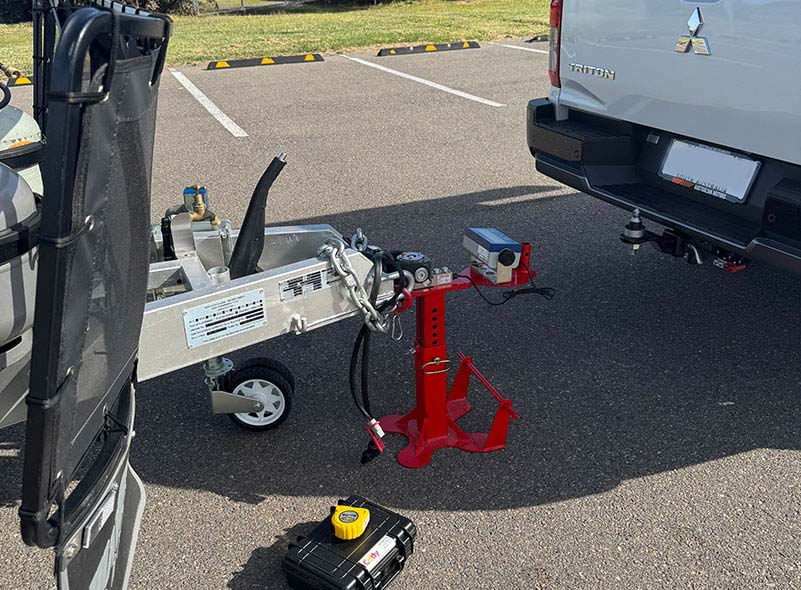
- The caravan hitch is placed on the tow ball scales at the correct measured height
- Each result is recorded step by step
- If any issues are found, we help you make a solution and then record a new final reading
All readings are printed for you on site. If changes are made during the visit you receive a second printed set that reflects your corrected and compliant setup.
The mobile weighing
Weighing must be performed on a flat, solid base. The area must be traffic-free.
All passengers must be included, including a large family dog. Vehicle and Caravan must be packed for a trip, this includes fuel, water, and bikes if taken. Weather is not really a concern, but for comfort and ease, we prefer no rain.
What we check during your mobile weighbridge service
During a whole weighing appointment with us, each component is measured and explained. You do not need any technical knowledge; everything is presented practically and straightforwardly.
Here is what is checked
- Tow vehicle weight
- Caravan trailer weight
- Aggregated trailer mass or ATM
- Gross vehicle mass or GVM
- Gross Trailer Mass or GTM
- Gross combination mass or GCM
- Axle loads for vehicle and caravan
- Tow ball mass or ball weight
- Load placement and balance inside the caravan
You receive a written report and an explanation of the numbers. If anything is outside a safe or legal range, we will help you to correct it.
We also refer to the towing rules provided by the South Australian Government, so your caravan setup follows the correct standards for loads and towing.
Our mobile weighing equipment
Our weighing system is based on Cody brand wireless weigh pads. The Queensland Police use these. They are known for durability and accuracy and are suitable for caravans, above-average loads and different tow setups.
Features include
- Cody three tonne pads are aluminium and built tough for harsh conditions
- Accuracy +/- 3%
- Long life rechargeable batteries
- 4 load cells per pad for accurate measurements
- 3T per pad capacity
- Each pad weighs 13 kg
- Trundle wheels attached to each pad for easy movement.
- The control box is able to gather accurate measurements within 1-3% high speed. It has a thermal printer. Wireless connectivity up to 15m.
- 1 box can hold up to 16 pads
- P67 rated for high level protection in all conditions. Up to 40hrs battery life.
Cody Wireless Weigh Pad
These are highly accurate, portable and customisable weigh pads. They are ideal for weighing a variety of vehicles, including cars, box trailers, caravans, and boats.
The Cody Wireless Weigh Pad solution lets you take measurements in 1 shot, improving efficiency and making weight collection easier and safer. Cody themselves recalibrate the weigh pads here in Adelaide yearly.
Cody Wireless Weigh Pad
These are highly accurate, portable and customisable weigh pads. They are ideal for weighing a variety of vehicles, including cars, box trailers, caravans, and boats.
The Cody Wireless Weigh Pad solution lets you take measurements in 1 shot, improving efficiency and making weight collection easier and safer. Cody themselves recalibrate the weigh pads here in Adelaide yearly.
Tow ball scales
We also use an AM2508 tow ball tester for accurate ball force measurement. The capacity of this tester is 600 kg. The tow ball height measured is between three hundred and fifty and five hundred millimetres. This tester is rechargeable and is recalibrated at the same time as the weigh pads.
These tools allow us to take all required measurements in a single setup, supporting safety and accuracy.

Understanding caravan weight terms
What the numbers mean and why they are important
These terms are used across Australia to describe the weight ratings for caravans and tow vehicles. The definitions follow the Government of South Australia towing rules, and, in addition, it’s vital to consider manufacturer information. A mobile weighbridge checks each of these ratings to ensure your caravan stays safe to tow.
ATM
ATM stands for aggregated trailer mass. It is the maximum allowable weight of a fully loaded caravan when it is not connected to the tow vehicle. It includes the caravan itself and everything packed inside. A mobile weighbridge helps confirm that the unhitched caravan’s weight stays within the ATM rating set by the manufacturer.
Why it matters
If the ATM is exceeded, the caravan’s structure and running gear are placed under excessive stress, increasing the risk of handling issues and component failure.
GVM
GVM stands for gross vehicle mass. It is the maximum allowable weight of the loaded tow vehicle. The weight of passengers, fuel, tools, towball weight and accessories all count towards this figure.
Why it matters
Many tow vehicles reach their limits faster than expected after fitting accessories such as bull bars, dual batteries, and drawers. Exceeding GVM can lead to poor braking and legal issues.
GTM
GTM stands for gross trailer mass. It is the maximum loaded mass that is carried by the trailer axle or axles when the trailer is coupled to the tow vehicle. This is the weight transferred to the ground through the trailer tyres while hitched.
Why it matters
If GTM is exceeded the trailer tyres, wheels, bearings and suspension can be overloaded. This increases heat, wear and the risk of component failure, and can affect stability and compliance with legal limits.
GCM
GCM stands for gross combination mass. It is the maximum combined weight of the loaded tow vehicle and the loaded caravan together. It is possible to meet both the ATM and GVM limits while still exceeding the combined total allowed for the pairing.
Why it matters
If GCM is over the limit, the engine and transmission are carrying too much load, which reduces performance and increases risk on hills and high-speed overtaking.
GCM
GCM stands for gross combination mass. It is the maximum combined weight of the loaded tow vehicle and the loaded caravan together. It is possible to meet both the ATM and GVM limits while still exceeding the combined total allowed for the pairing.
Why it matters
If GCM is over the limit, the engine and transmission are carrying too much load, which reduces performance and increases risk on hills and high-speed overtaking.
Axle loads
Axle loads show how much weight sits on each axle of the caravan and tow vehicle. A mobile weighbridge measures each axle separately to check how the load is distributed.
Why it matters
Uneven loading forces tyres and suspension to work harder than designed. This can result in sudden tyre wear or steering changes during travel.
Ball weight
Ball weight is the downward force made by the caravan drawbar on the tow hitch of the vehicle. This force helps keep the caravan steady behind the vehicle. Measuring the tow vehicle hitched and unhitched gives the actual ball weight.
Why it matters
Too little ball weight increases sway. Too much ball weight overloads the rear axle of the vehicle. A correct ball weight helps the caravan track straight and improves steering control.
Load distribution
Load distribution describes where all packed items sit in the caravan. Most caravans handle best when most of the weight is forward of the axle group. Small shifts inside the caravan can make a big difference to performance on the road.
Why it matters
A mobile weighbridge helps find the right balance so steering stays predictable and the caravan feels stable on the highway.
Compliance
Compliance refers to meeting all manufacturer and legal limits. South Australian towing rules explain the requirements for safe loading. A mobile weighbridge checks each value against these ratings and confirms that your towing setup is compliant with road travel requirements in South Australia.
Why it matters
Insurance and roadside inspections can focus on weight issues. Being compliant avoids fines and problems after incidents.
Why caravan weights matter for safe travel
The caravanning community often talks about enjoyment and comfort, but safety is always the first priority. When a caravan is overweight or the balance is not right, it places extra pressure on the tow vehicle, increases braking distance and creates a higher risk of sway when passing trucks or in strong winds.
Common risks from incorrect loading include
- Loss of steering control during sudden movements
- Caravan sway when travelling around 90 to 110 kilometres per hour
- Reduced braking efficiency on hills
- Tyre blow-outs from overloaded axles
- Suspension strain or failure
- Insurance claims are being declined after an incident that involves overweight towing
- Defect notices or fines from roadside checks
Even small changes like fitting bike racks on the rear or adding extra supplies can push the setup outside a safe zone. A mobile weighbridge shows exactly what needs to move, lighten or adjust so towing feels stable and predictable.
Common problems found during caravan weighing
Many caravans look fine from the outside, but once the numbers are checked, there can be issues that need fixing. Some of the most frequent findings include
- Ball weight too low, which can lead to sway
- Too much weight behind the caravan axle, also creating sway
- GVM exceeded due to added accessories and passengers
- Axle load imbalance from heavy items stacked on one side
- Tow vehicle accessories adding more load than planned
These issues can start small and grow over time as more items are added to the caravan. Regular checks keep the setup safe and help you enjoy each trip with peace of mind.
How the mobile weighbridge appointment works
Weigh Be Safe’s process is friendly and straightforward from start to finish. Our goal is to help you travel safely, not to fail you on a test.
Here is what to expect
- We arrive at your home or selected location
- The tow vehicle is weighed without the caravan attached
- The caravan is weighed unhitched
- The whole rig is then weighed together when hitched
- Axle loads are checked separately
- Ball weight is calculated
- You see the numbers and understand what they mean
- We suggest adjustments to improve safety and road handling
- You can make small changes on the spot, so you see the effect
- You stay involved the whole time, and questions are welcomed. You finish the appointment feeling informed and ready for the road.
Who benefits from mobile caravan weighing
Many caravan owners want reassurance that everything is safe before a long trip. Others have already felt towing issues and want answers. Some have purchased a new tow vehicle or upgraded their caravan and want to make sure the combination works well.
This service is helpful for
- People setting up a caravan for the first time
- Families loading for long school holiday travel
- Caravan upgrades with new suspension or added accessories
- Travellers who feel sway or instability at highway speeds
- People not sure if they are carrying too much
- Owners who want to avoid problems with roadside checks
Safe towing is for everyone. Understanding your numbers gives you more confidence when travelling around South Australia and interstate.
The top 3 issues we typically fix
The issue we see most often is the rear axle being overweight for the tow vehicle. We encourage relocation or weight reduction. In extreme cases, a weight distribution hitch may be an option.
The tow ball weight is either too heavy or too light. This is down to redistribution of weight. The level of the Caravan when hitched to the vehicle. It can be an adjustment to the tow ball height.
Logistics
Typically, a reweigh is quicker than the initial weigh, but it also depends on the client’s understanding of any adjustments they have made to meet compliance requirements. The same area is used for the initial weigh, if possible.
What you receive after your weighing appointment
Our clients receive a comprehensive report that we print on-site at their vehicle and Caravan. This report clearly shows any areas where they do not meet compliance. After the on-site weigh, we will email a copy of the report with a detailed explanation of any suggestions or a referral to any other business we recommend for compliance.
The report given at the time of the weigh and then emailed includes:
- Client details
- Vehicle and Caravan details
- Tow Ball Height and percentage
- Vehicle and Caravan maximum weight specification
- Actual weights of vehicle and caravan
- Clients weight difference which in green or red (green is underweight red is overweight)
Frequently asked questions about our mobile weighbridge in Adelaide
Do I need to empty or fill my water tanks before the weigh?
You can weigh the caravan exactly as you plan to travel. That gives the most helpful result.
How long does a mobile weighbridge visit take?
Usually around forty-five minutes to one hour, depending on questions and adjustments.
Do I stay with the caravan during the weighing?
Yes. You are involved and can ask questions throughout.
Can you help me move items to balance the load?
Yes. Small changes can often be checked on the day.
What if the caravan or tow vehicle is overweight?
You will be shown where the problem sits and what actions can solve it. The goal is to help you fix the setup, so it is safe to tow.
Which areas do you visit?
Weighing is available across Adelaide and the surrounding suburbs. There may be additional travel charges for areas outside the metro region. Check service areas when booking.
Book a mobile weighbridge in Adelaide
The next trip always feels better when you know your towing setup is safe. Make a booking and enjoy the peace of mind of the correct weight before you start the engine.
Call us on 0414 968 403 or send a booking request, and we will get back to you with available times.